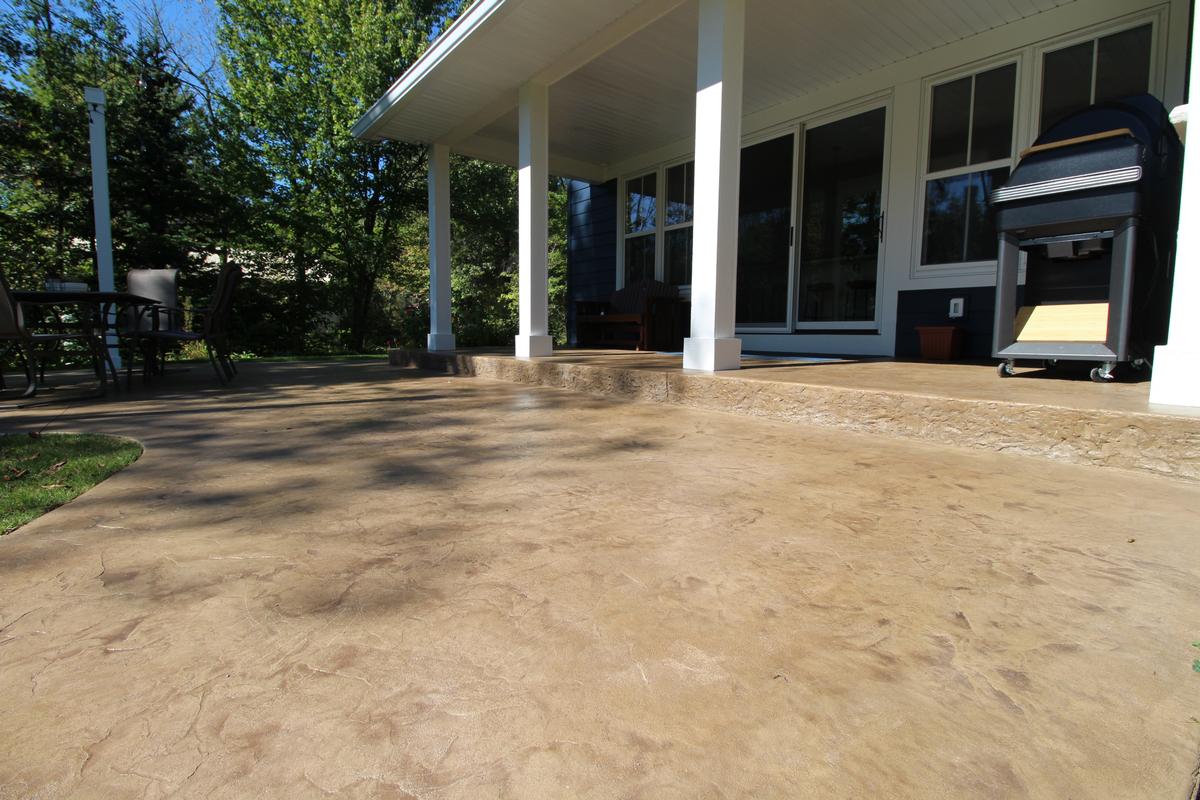
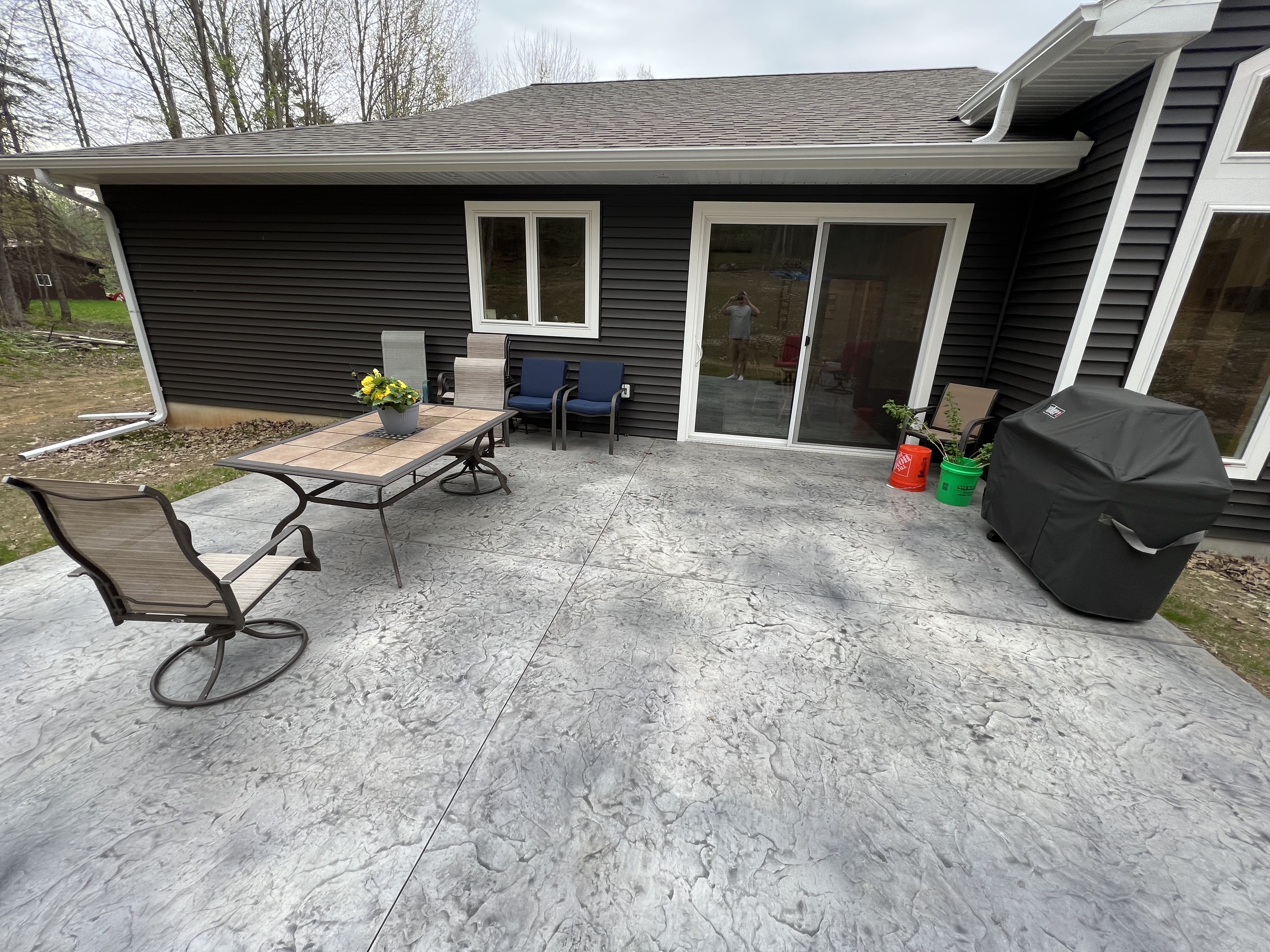
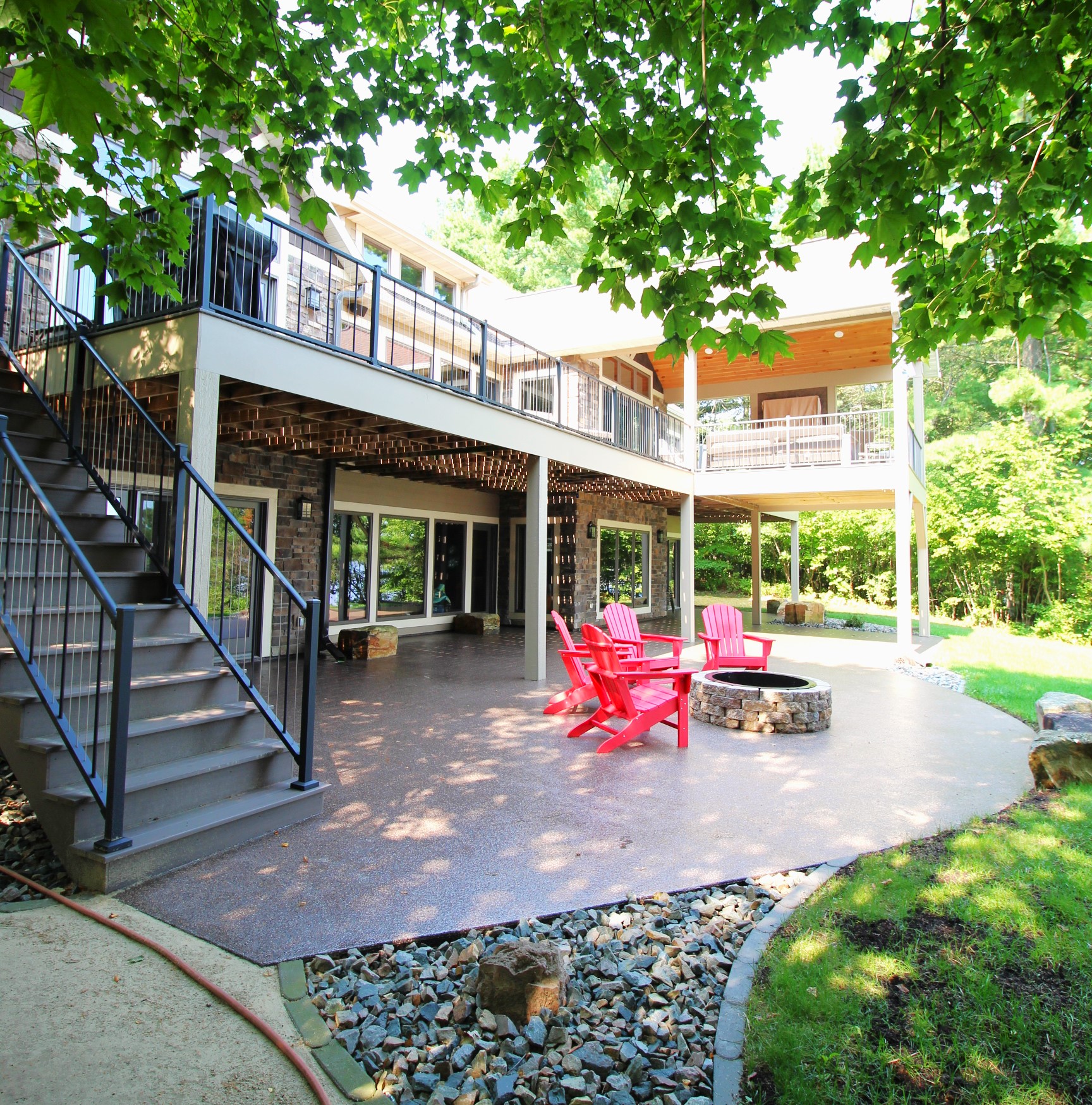
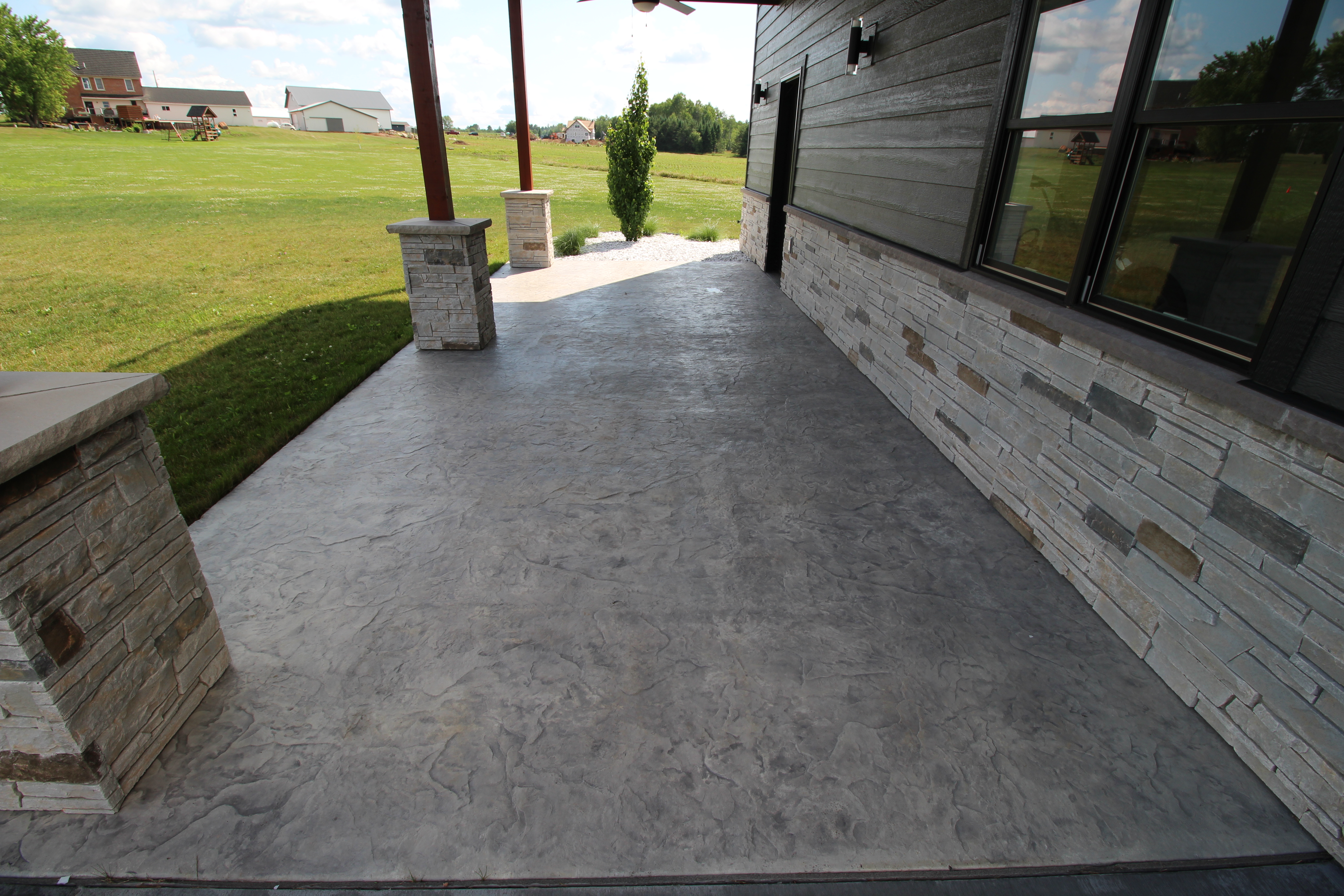
A new concrete patio is the cheapest way to get a usable backyard in Wausau, WI, and the easiest one to get wrong. We pour concrete patios off back doors, under decks and under covered porches, and the ones that last come down to three decisions made before anyone talks about finishes: how big, how it meets the house, and where the water goes.
Get those right and almost any finish holds up. Get them wrong and the nicest pattern in the catalog will be tipped toward your foundation in five years.
Concrete Patio Cost in Wausau
A plain concrete patio on a proper base typically runs about $9 to $22 a square foot, with decorative finishes higher. On common patio sizes that works out to:
| Patio size | Area | At $9 to $22 per sq ft |
|---|
| 12 x 12 ft, table for four | 144 sq ft | $1,300 to $3,200 |
|---|
| 16 x 20 ft, table plus grill | 320 sq ft | $2,900 to $7,000 |
|---|
| 20 x 25 ft, dining and lounge areas | 500 sq ft | $4,500 to $11,000 |
|---|
Typical ranges, not a quote. Your price comes from the on-site estimate.
Removing an old patio, steps down from the door, a curved edge, colored concrete or exposed aggregate all push a job toward the top of that range. Access matters too: a backyard the concrete truck can't reach means pumping or wheeling every yard of concrete, and that shows up in the price.
Sizing a Backyard Concrete Patio
Ask any concrete patio contractor and you'll hear the same thing: people almost always ask for a patio that turns out too small once the table is on it. A dining table with chairs pulled out needs roughly a 12 by 12 foot square of its own. Add a grill with room to stand at it, a path to the yard that doesn't go through the dining area, and a couple of lounge chairs, and most families end up between 300 and 500 square feet. We stake the outline at the estimate so you can stand on it before anything gets dug.
Bigger is not always better money. A patio that runs past the shade of the house bakes in July, and every square foot is another square foot to shovel if you use it in winter. Covered patios under a roof or a deck stay usable longer into the fall, and they're easier on the finish.
Patios Against the House: Backfill, Grade and Frost
The most common patio failure we're called to look at isn't cracking. It's a slab that has sunk along the house and now sends rain toward the basement. The cause is almost always the backfill: the soil pushed back against a foundation after it's built is loose, and it keeps settling for years. A patio poured on it without digging out and compacting goes down with it.
So the base work next to the house gets more attention than the rest of the slab, and the patio gets pitched away from the foundation, a quarter inch per foot is the usual rule of thumb. On a newer home where the backfill is still settling, the honest advice is sometimes to wait a season or two before pouring. Steps and landings are different from the slab. Wisconsin's building code wants footings for stoops and landings attached to a house at least 48 inches deep or below frost, whichever is deeper, so a step off a door is built differently than the patio it sits on.
Concrete Patio Finishes: Broom, Exposed Aggregate, Colored
Broom finish
The standard. A broom dragged across the surface leaves a fine texture that grips when wet and costs nothing extra. It looks like a sidewalk because it is the same finish.
Smooth trowel borders
A smooth band around the edges and along the joints makes a plain slab look finished. It's cheap to add and shows up in a lot of our driveway and patio work.
Exposed aggregate concrete
The top layer of cement paste is washed off before it sets, leaving the stone in the mix showing. Exposed aggregate is grippy, hides dirt and hides small cracks better than broom. It is harder on bare feet and needs to be sealed.
Integral color
Color mixed into the whole truck takes the gray edge off a patio and doesn't wear off, because it goes all the way through. Expect some variation between pours on different days.
If you want the slab to look like slate or flagstone, that's stamped concrete, which has its own costs and upkeep.
Steps, Fire Pits and Seating Walls
A patio a step or two below a sliding door needs real steps, not a stack of blocks. Steps get poured with matching risers and a landing deep enough to open a screen door while standing on it. A fire pit ring gets set before the pour so the slab is formed around it, and if you want a seating wall, it needs its own footing below frost or it will heave independently of the patio.
Concrete Patio vs Pavers or a Deck
A concrete patio is usually the cheapest of the three for the same footprint and the least work to own. Pavers cost more to install but let you pull up a section and relay it. A deck makes sense when the door is well above grade and a patio would need a wall of steps. If you're torn, tell us at the estimate which one you're comparing against; a concrete patio contractor who won't say where concrete loses isn't much help and we'll be straight about where concrete loses.
Old Patio: Repair or Replace?
A patio with hairline cracks and a level surface needs a cleaning and maybe a sealer, not us. A patio that has dropped at the house, rocks underfoot or holds water against the foundation needs to come out, because patching the top doesn't move the base. Tear-out of an old patio is part of the estimate when it applies.