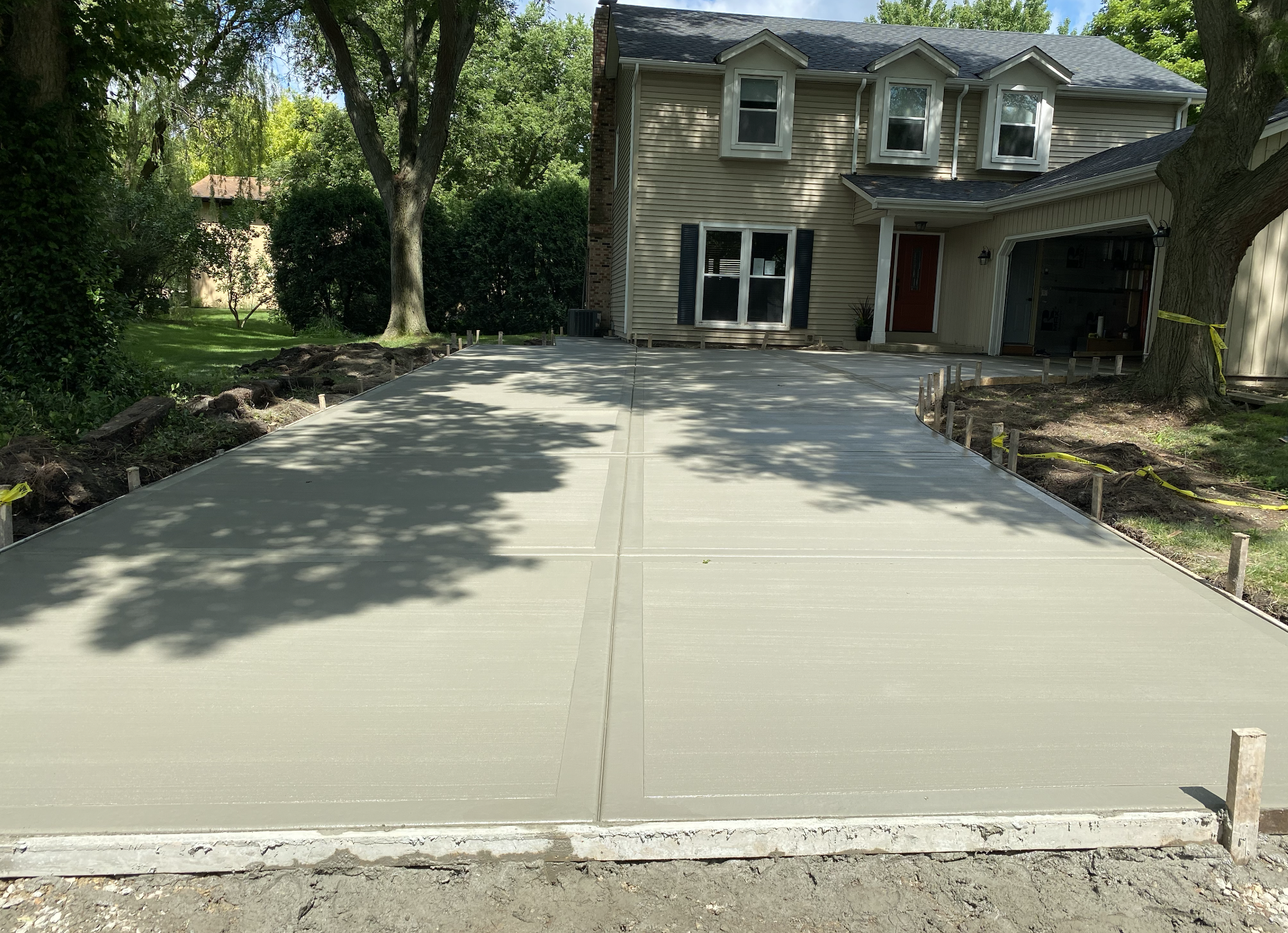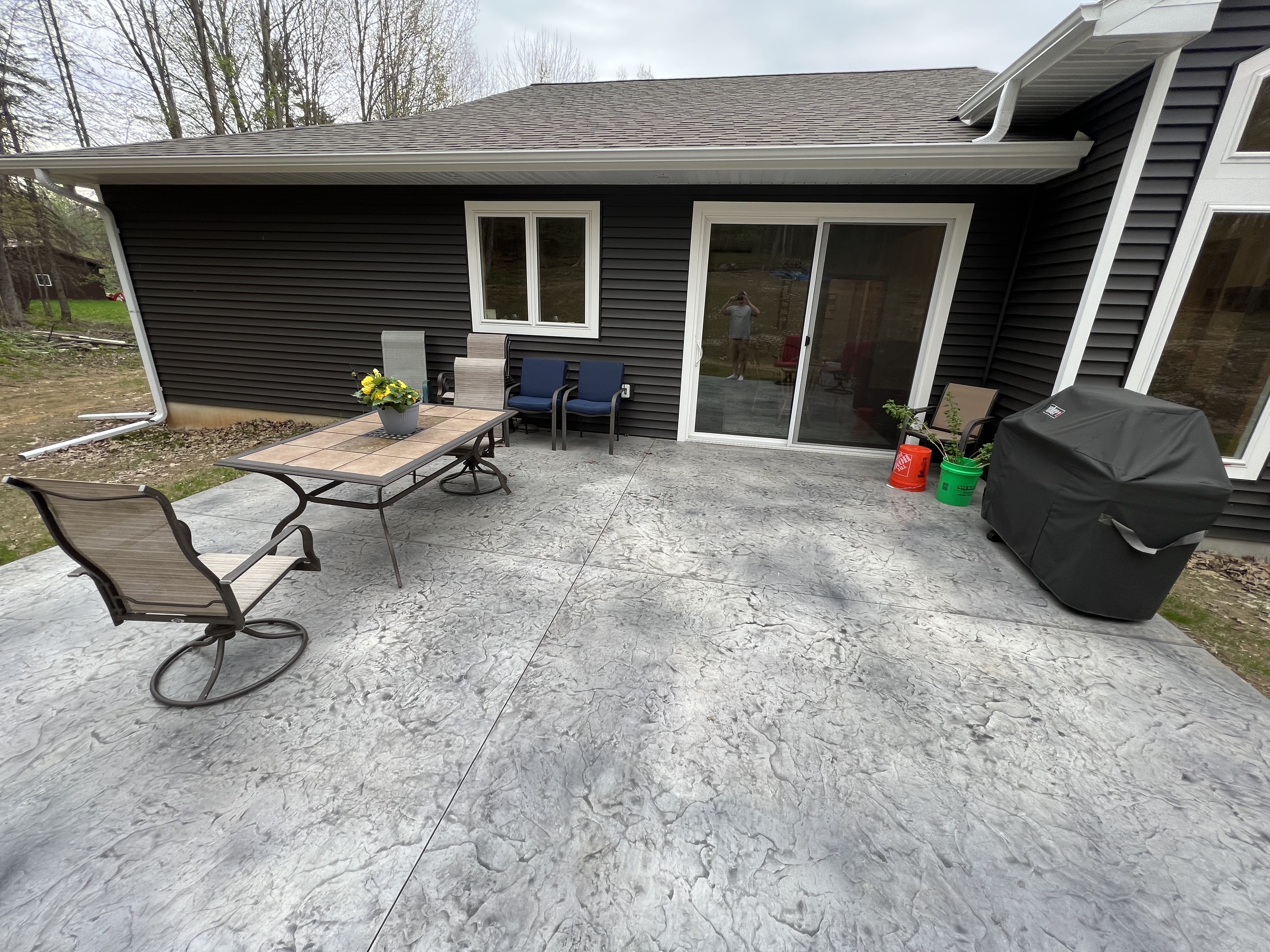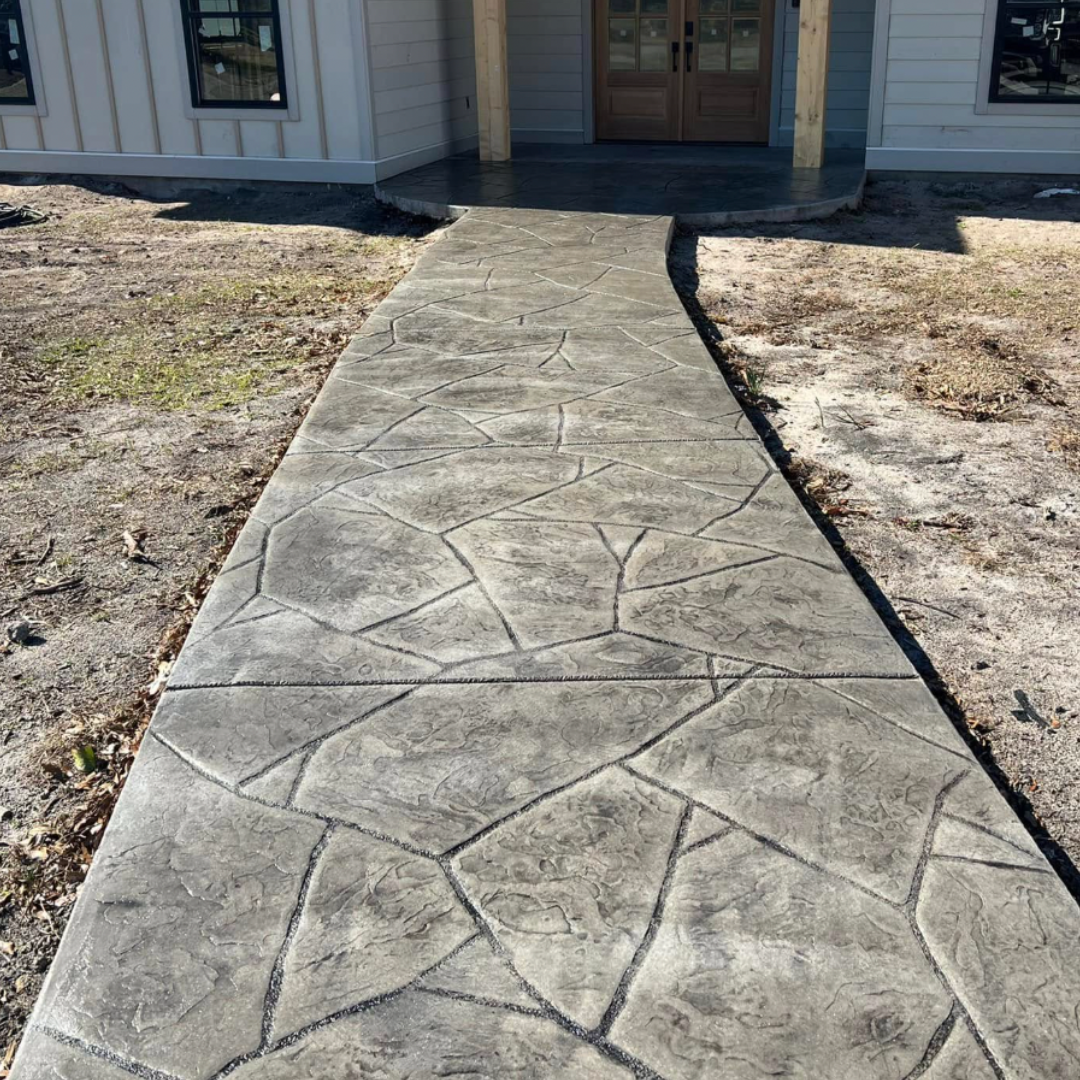
Much of Schofield is settled, established neighborhoods, and many of the driveways there are as old as the houses. A slab poured a generation or two ago, often thin, often straight onto the native soil, with few joints, has been through decades of freeze and thaw and road salt. When a Schofield homeowner calls a concrete contractor, it's usually because that original driveway has finally started to break up.
What We Find Under an Old Schofield Driveway
The tear-out tells the story. On older driveways the usual findings are a slab thinner than anything poured today, no gravel base or a thin one that has mixed into the soil, tree roots that have lifted a section, and joints too far apart, so the slab cracked wherever it wanted. None of that can be fixed from the top of a Schofield driveway. A replacement starts by digging out the soft material, building a compacted gravel base, and setting the grade so water runs to the street instead of the garage. The step by step is on the concrete driveway page.
Not every old driveway needs to go. If yours is flaky on top but flat, with cracks that haven't moved, cleaning and sealing buys years for a fraction of the cost. We'll tell you if that's where you are.
Schofield's Driveway Access Permit, Step by Step
Schofield is strict about paperwork for driveways, and the code says it plainly: "No verbal or other informal approval shall be considered valid." Here's how the city's process runs for a new, rebuilt, widened or improved driveway:
- Permit first. Any new, reconstructed, improved or expanded driveway access needs a driveway access permit from the city's zoning administrator. That includes a straight replacement.
- Other road owners. If the driveway comes off a lettered county road, Marathon County's highway department has to sign off too; off a state highway, WisDOT.
- 48 hours' notice. The city wants notice at least 48 hours before work starts in the right-of-way, and it inspects the work.
- Final inspection. The owner requests a final inspection when the work is done.
- One year. A permit that isn't used within a year is void.
Along Grand Avenue, from the Eau Claire River bridge north to the city line, the city manages access more tightly: residential driveway widths are matched to what's there, up to 16 feet.